The Leander, Texas, machinist turned rifle builder has earned a following in the Precision Rifle Series. His LongRangeRifles.com portfolio shows what that same shop does when the assignment is a rifle meant to be carried all day.
Inside RIP Precision Rifles with Texas Builder Wes Ripley
The Leander, Texas, machinist turned rifle builder has earned a following in the Precision Rifle Series. His LongRangeRifles.com portfolio shows what that same shop does when the assignment is a rifle meant to be carried all day.
One of the most revealing numbers in the RIP Precision Rifles portfolio is the difference between two listed weights. The shop’s 7 PRC hunting rifle is listed at 7.5 pounds. Its .25 Creedmoor PRS rifle comes in at 23. Both came from Wes Ripley’s shop in Leander, Texas, and both list a TriggerTech Diamond. Beyond that shared detail, the two rifles look like answers to entirely different customer conversations. 7 PRC hunting build · .25 Creedmoor PRS build
Those conversations are the thread running through RIP Precision’s work. The shop’s public record includes an appearance in a survey of top PRS shooters, a podium finisher who singled out Ripley’s gunsmithing, and a portfolio that stretches from conventional hunting stocks to heavy competition chassis. Put those records together and you get a clearer picture of the builder than any single rifle can provide.
A machinist before a rifle builder
Ripley started making rifles for himself in his early twenties. He was already a machinist, and the company’s account of his career describes work in manual machining, tool and die, and CNC production. By the time he started RIP Precision Rifles, he says he had spent two decades in the custom firearms industry. On LongRangeRifles.com, he traces his exclusive focus on precision rifles under the RIP name to 2017. RIP Precision company history · LongRangeRifles.com builder profile
That progression explains the range of assignments the Leander shop takes on today. Ripley describes the rifles as fully custom and lists hunting, PRS, F-Class, and benchrest among the applications he builds for. Those customers arrive with different definitions of a finished rifle. For a hunter, the brief may revolve around how the rifle carries. For a competitor, it may revolve around what the rifle feels like across a full day of stages. F-Class and benchrest bring their own equipment conventions and match requirements. The builder’s job begins with understanding which of those assignments is actually on the table. RIP Precision builder profile
The company’s own gallery gives some history to the variety visible in the registry. RIP showcases two 6mm Creedmoors with different actions and Manners stocks, alongside a 6.5 Creedmoor with a carbon-fiber barrel. Even within a small set of rifles, the cartridge name tells only part of the story. That is a useful detail to keep in mind when browsing a custom builder’s work, where a familiar chambering can appear on projects with very different briefs. RIP Precision’s featured builds
A place in the Texas competition community
Precision Rifle Blog offered a measure of RIP Precision’s presence in competition in its survey of the 2023 Precision Rifle Series Open Division. Four shooters in the top 200 were represented by RIP Precision, including one in the top 25. Ripley was also in that field and finished 130th in Open. Those numbers give the shop’s competition work a place in the record and establish that Ripley has spent time on the same match circuit as the shooters he builds for. Precision Rifle Blog’s 2023 PRS gunsmith survey
A later example comes from Brandon Rudge. At the October 2024 Texas Precision Matches Fall Classic in College Station, Rudge finished third overall behind teammates Matt Aheimer and Tim Miller. In the match recap March Scopes republished, Rudge credited Ripley and RIP Precision for the gunsmithing on his rifle. Miller also lists RIP Precision Rifles as his gunsmith on his PRS profile, where he thanks Ripley for his builds. The standings establish the finishes, while the shooters’ accounts establish the working relationships. PRS match results · Rudge’s match recap · Tim Miller’s PRS profile
Ripley’s work also shows up outside the match results. In an article for AccurateShooter, Texas shooter Mike McCasland described working with Ripley while exploring the 6mm GT for long-range target shooting. McCasland came to that project with an F-TR rifle and an interest in PRS. Years later, a dedicated 6 GT PRS rifle appears in RIP’s LongRangeRifles.com portfolio. The two accounts capture the cartridge in different settings and give readers another way to see how the shop’s work crosses disciplines. McCasland’s article · RIP 6GT PRS registry entry
Three rifles that show the range of the shop
RIP Hunter 7PRC 1
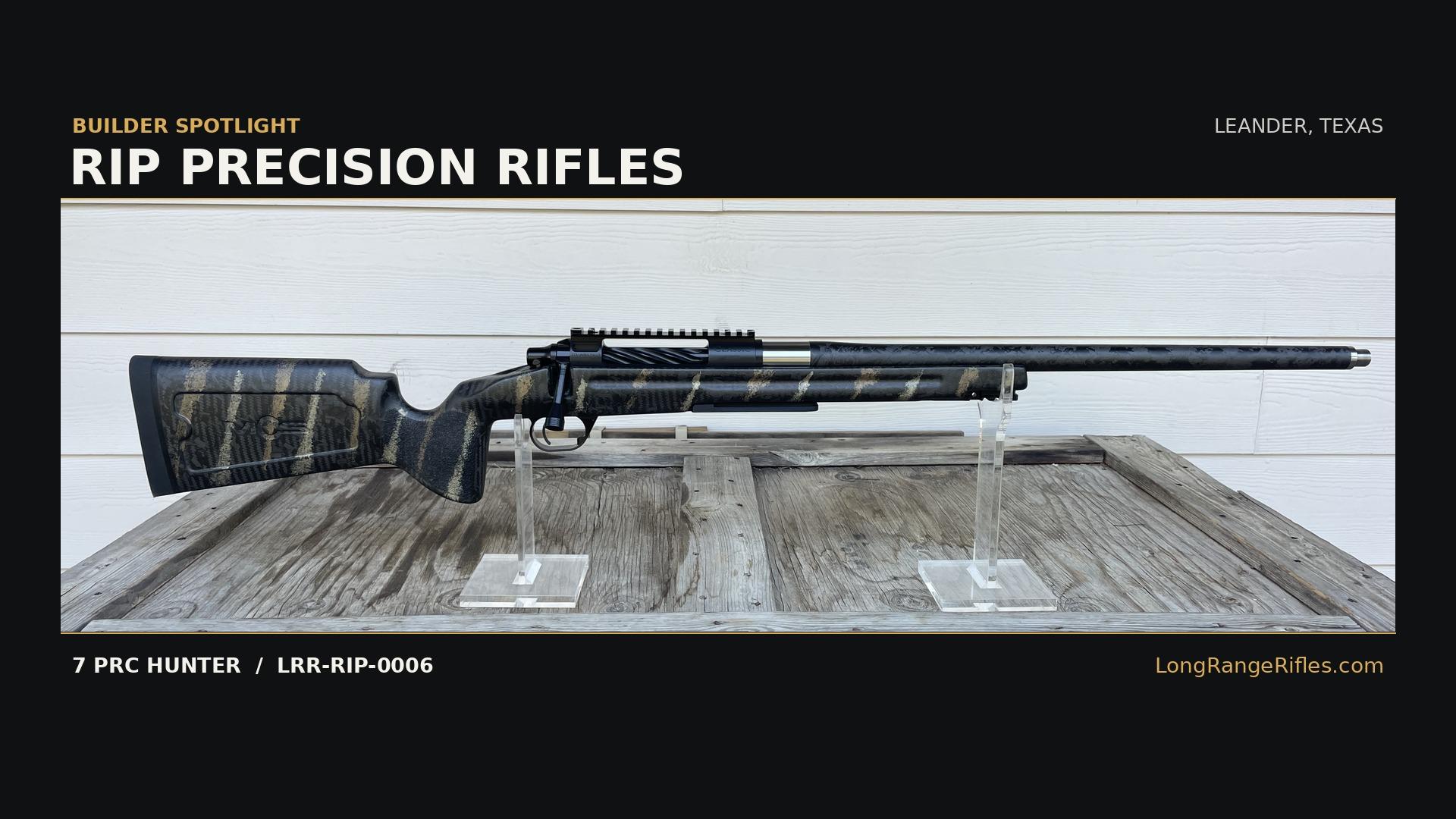
The 7 PRC hunter, registry ID LRR-RIP-0006, is listed at 7.5 pounds. Its profile identifies a Manners LRH stock and a carbon-fiber barrel. The conventional stock silhouette is immediately apparent in the listing photos, especially alongside RIP’s competition chassis rifles. The weight is the most useful starting point for understanding the brief. This is a rifle filed under Hunting in the registry, and it represents one approach within a portfolio that also includes 6 Creedmoor and .300 WSM hunting builds. RIP Hunter 7PRC 1 · RIP Precision portfolio
RIP PRS 25 Creedmoor
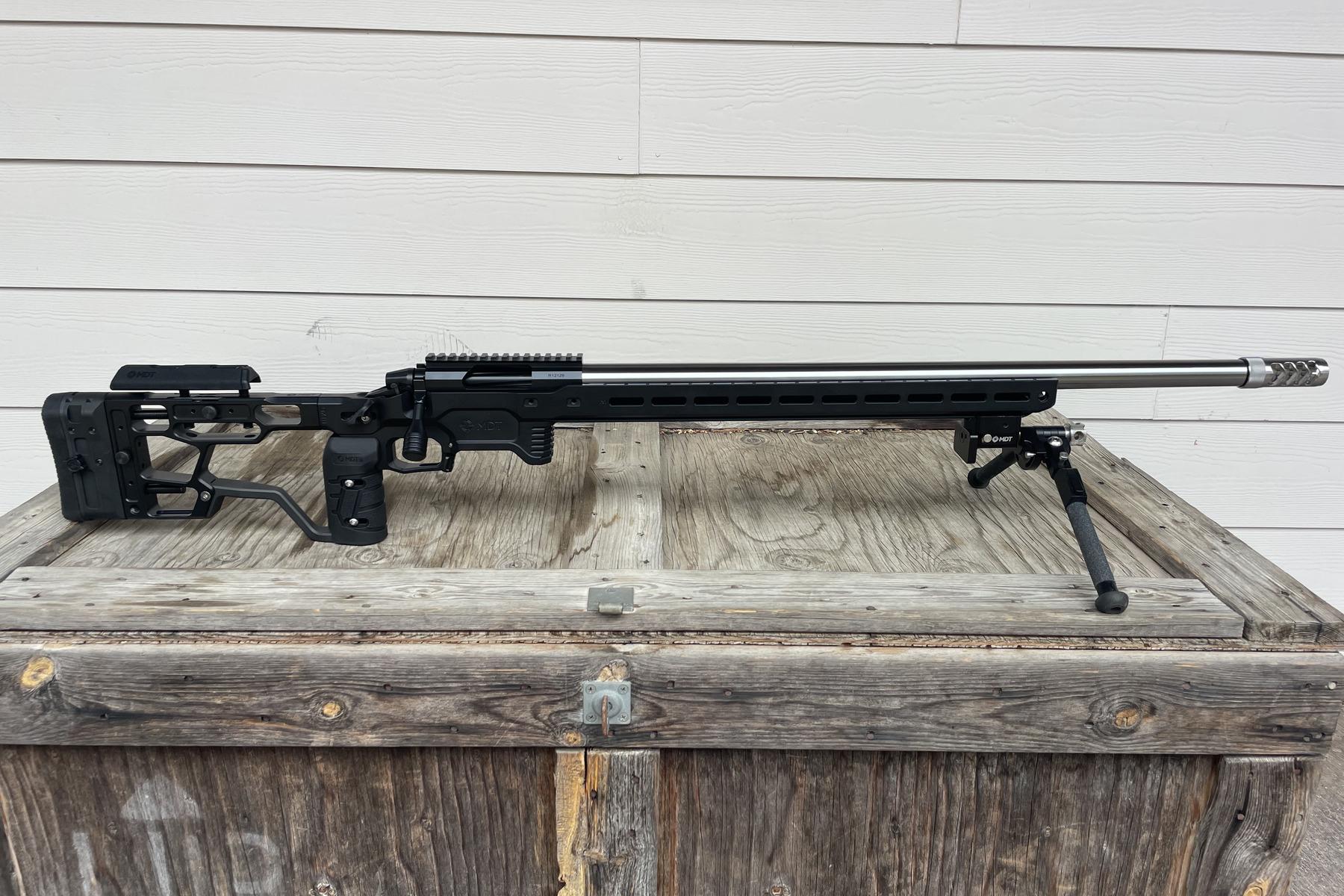
The .25 Creedmoor, registry ID LRR-RIP-0005, is listed at 23 pounds and wears an MDT ACC Elite chassis. The rifle’s profile makes the comparison with the 7 PRC easy. Both list the same trigger model, but the change in stock format and the 15.5-pound difference tell you far more about their respective assignments. The photos are worth opening side by side. The shape and proportions of the two rifles make the contrast visible before you work through the specifications. RIP PRS 25 Creedmoor
RIP 6GT PRS
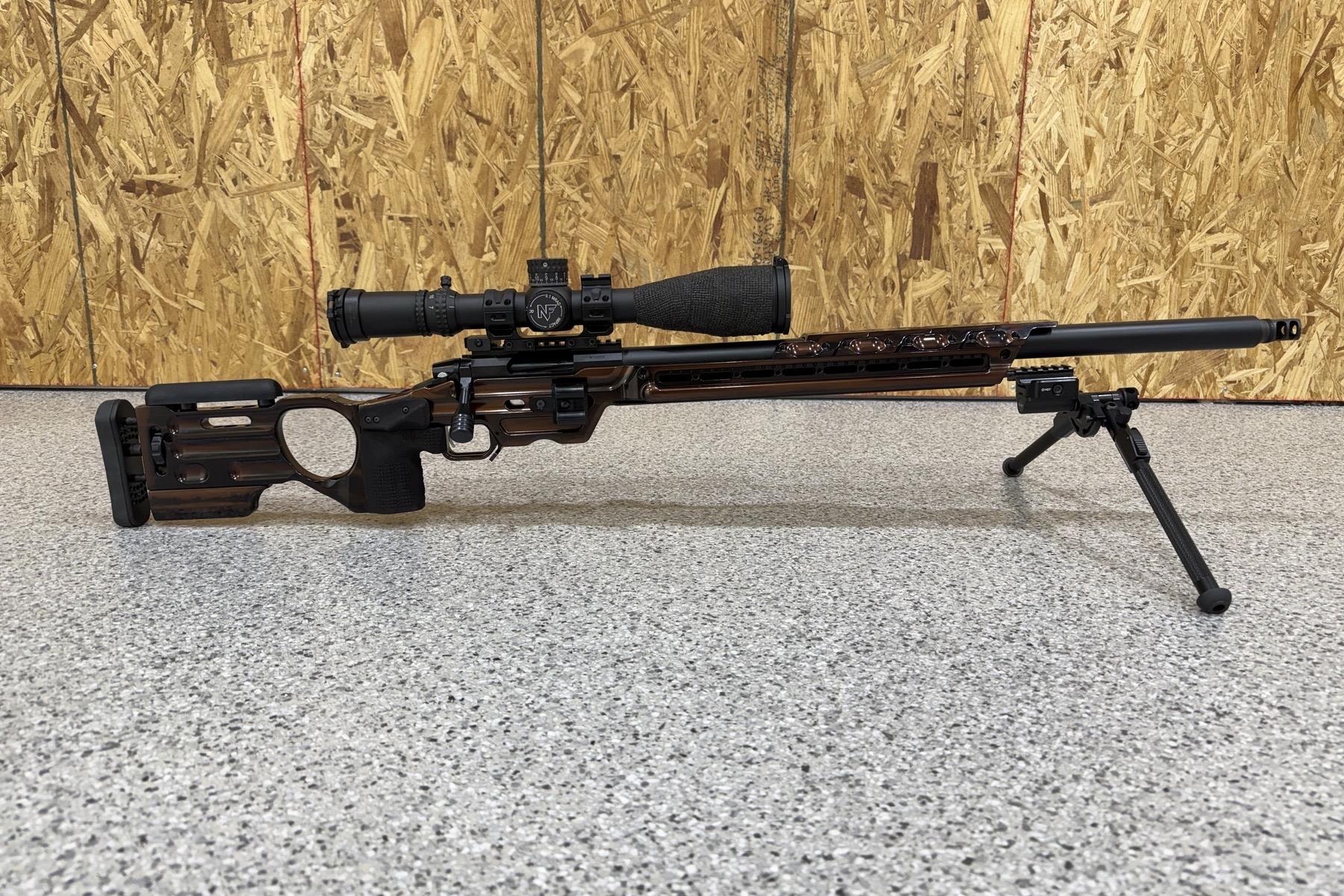
The 6 GT build, registry ID LRR-RIP-0003, is listed at 25 pounds in an MPA Matrix Pro 2 chassis. Put it next to the .25 Creedmoor and the comparison gets more specific. Here are two competition rifles from the same builder, both using the Impact 737R action, with different chassis and a two-pound difference in listed weight. That pairing shows the value of looking within a category as well as across categories. The hunting-to-PRS comparison shows the breadth of RIP’s work. The two PRS listings show variation inside a single discipline. RIP 6GT PRS · RIP PRS 25 Creedmoor
The hunting side of the shop
The competition record is the easiest part of the RIP story to document through outside sources. The hunting portfolio is documented in a different way. The registry names individual builds and lets you see the choices that distinguish them. The company’s site also publishes a customer account from Clay Parrish, who asked RIP to build a rifle his son could handle. Parrish described a project that needed to be short and light. His account gives the public portfolio something a list of parts rarely does. It tells you why that particular rifle existed. Parrish’s account on the RIP Precision site
That story also gives some context to the presence of several hunting entries in the registry. The 7 PRC, 6 Creedmoor, and .300 WSM appear as individual projects in the portfolio. A reader can come to those listings looking for a familiar chambering and come away with a better question about the rifle itself. What had to matter most for the person who would carry it? Some listings make the broad assignment evident from the weight and stock. A customer account can fill in details that a registry entry has no reason to capture. Together, they give the hunting side of RIP Precision an identity of its own. RIP Precision builder profile
Reading the portfolio as a whole
RIP’s website publishes a half-MOA-or-better accuracy guarantee with match-grade ammunition. That is the company’s stated guarantee. Individual registry entries provide a different kind of information about particular rifles, including listed specifications and, where present, an accuracy figure. A match result adds a third kind of evidence. It records how a shooter finished on a given day. Each source answers a different question, and keeping those details in context makes the portfolio more informative. RIP Precision’s published guarantee · RIP Precision builder profile
A good starting point is to open the 7 PRC hunter and the .25 Creedmoor together, then bring in the 6 GT. The first comparison gives you the broad view of the Leander shop. The second shows how much room there is for different choices within Ripley’s competition work. What stays consistent across the portfolio is the shop’s willingness to take on distinct assignments, from rifles intended to spend much of the day on a sling to rifles intended for a full day on a PRS course.
Explore the RIP Precision Rifles portfolio on LongRangeRifles.com