What the caliber mix, MOA averages, and use-case tags reveal about this Mesa shop's current direction
Precision Hunting Supply: Reading the Data Behind a Magnum-Heavy Build Sheet
A quarterly data dive into Precision Hunting Supply's build sheet reveals a Mesa-based shop leaning hard into magnum hunting calibers while quietly chasing PRS-grade accuracy.
Precision Hunting Supply's Caliber Mix Tells a Magnum Story
Precision Hunting Supply, the Mesa-based verified builder operating under the RTK by PHS banner, has quietly assembled a 22-rifle body of work this quarter that reads less like a general hunting shop and more like a magnum specialist's portfolio. Pull the caliber distribution apart and the pattern is unmistakable: 6.5 PRC and 7 PRC each account for seven rifles, meaning fourteen of twenty-two builds — nearly two-thirds of total output — sit in that 6.5mm-to-7mm PRC-family sweet spot. Add four 25 Creedmoor builds and two 300 PRC rigs, and you've covered twenty of the twenty-two rifles on record with exactly five cartridge families, all of them built around flat-shooting, heavy-for-caliber bullets designed to buck wind at 800 yards and beyond.
That's a meaningfully different signature than a shop chasing variety for its own sake. There's no 6.5 Creedmoor in the lineup, no .308 Win, no 300 Win Mag — the cartridges that used to define "long-range hunting" a decade ago are simply absent. Instead PHS has committed almost entirely to the newer PRC family (Precision Rifle Cartridge, Hornady's case-head-matched lineup) plus the 25 Creedmoor, a combination that suggests the builder is specifying ammunition and barrel contours around magazine-length magnum performance rather than retrofitting legacy chamberings. The one true outlier — a .45 caliber long-range muzzleloader — reads as a custom one-off rather than a line item, likely built to spec for a specific hunting season rather than a cartridge the shop plans to repeat at volume.
What's notable is the near-total absence of mid-size and small-bore target cartridges that dominate PRS-only shops. There's no 6mm Dasher, no 6 BR, no .223 anywhere in the approved list. For a builder carrying both "Production Builder" and "Hunting Specialist" tags, the caliber data confirms the self-description: this is a shop building rifles that need to kill animals cleanly past 600 yards, not rifles optimized purely for paper and steel.

Accuracy Numbers and the Use-Case Split
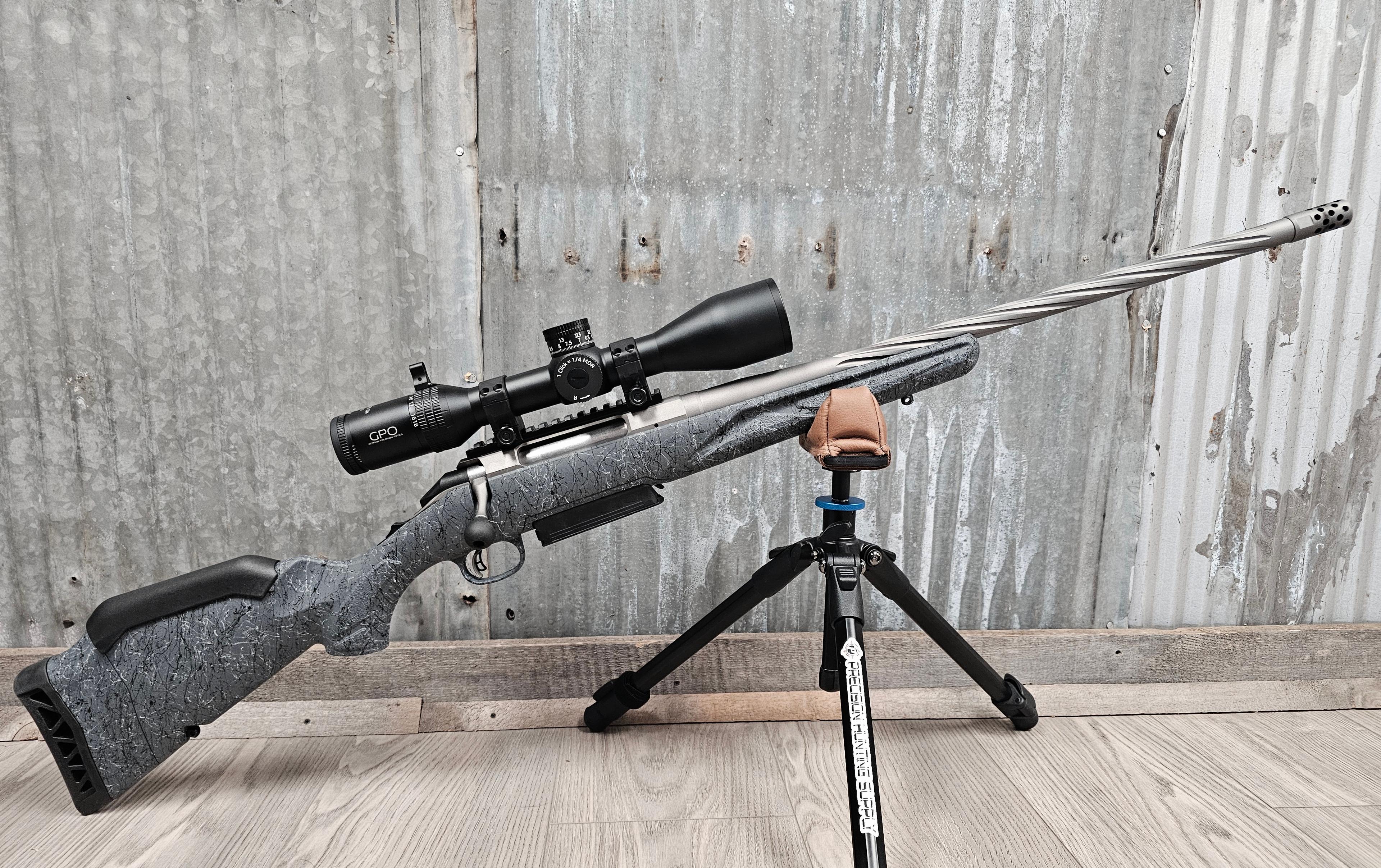
The average MOA across verified rifles sits at 0.4938 — call it half-minute average group performance across everything PHS has submitted with data attached. That's a strong number for a production-leaning hunting builder, though it's worth noting the spread beneath that average is wide. The tightest verified group on record, the Allterra X 25 Creedmoor, posted a 0.125 MOA figure that would be competitive in a PRS field, while the Ruger American Gen 2 6.5 PRC checked in at 0.755 MOA — still a perfectly serviceable hunting number, but a reminder that PHS's semi-custom and production-action builds carry a real accuracy gap versus their fully custom chassis work.
That gap lines up cleanly with the use-case profile: 19 rifles tagged Hunting against 10 tagged PRS Competition (the builder allows multiple tags per rifle, which is why the totals exceed the 22-rifle inventory). Roughly 86% of the catalog carries a hunting designation, but nearly half also carry a competition tag — meaning PHS isn't building pure hunting rigs so much as dual-purpose rifles meant to do both jobs from one chassis. That's consistent with the magnum-heavy caliber mix: 7 PRC and 6.5 PRC are both popular in PRS Production division right now precisely because they double as serious hunting cartridges, so a hunter buying a PHS rifle for a fall elk trip isn't giving up much if he also wants to run it in a club match in the spring.
The unverified MOA entries are worth a mention too — nine of the twenty-two rifles show no logged group data, including builds on the Curtis Custom X-Lite 7 PRC and the Custom Long Range Muzzleloader. That's not unusual for a builder whose core business is hunting rifles destined for the field rather than the range — many hunting clients never return a chronograph sheet or group target — but it does mean the 0.4938 average is drawn from a smaller, likely higher-performing subset of the full inventory, and buyers shopping the unverified listings should ask for range data before assuming parity.
Tier Position and What the Lead Time Signals
At a 66.6 LRR score with verified status and a founder badge, Precision Hunting Supply sits in a middle tier relative to the platform's top custom houses, but the data suggests that score understates their technical output. A sub-0.5 MOA average across a 22-rifle sample, with a meaningful cluster of builds under 0.25 MOA, is genuinely strong for a shop that self-identifies as a production builder rather than a bespoke smith. The badge and tier combination reads as a shop still building its competitive reputation on this platform even as its actual bench work — judging by group sizes — already punches above its current standing.
All 22 rifles on record are currently listed for sale, a 100% sell-through-to-listing ratio that's worth flagging. For a production-style builder, having the entire catalog simultaneously available suggests either a built-to-order model where "listed" rifles are really open build slots, or a genuinely large current inventory on hand in Mesa. Either way, it signals capacity: a shop that can carry seven 6.5 PRC and seven 7 PRC builds concurrently, spread across platforms from Seekins Precision actions to Bergara B-14 chassis to full custom Allterra-X rigs, has built real supply-chain depth rather than a one-gunsmith-at-a-time operation.
For a buyer weighing PHS against other tier peers, the practical takeaway is this: expect a magnum PRC-family rifle, expect it to be built on a mix of semi-custom and production actions rather than a single house platform, and expect accuracy that clusters tightly around half-minute with upside into the 0.2s on their best verified builds. What you won't find here, at least in the current body of work, is a small-bore PRS-only rifle or a traditional magnum like 300 Win Mag — PHS has made its bet on the PRC family and the 25 Creedmoor, and the aggregate data says that bet is paying off in group sizes.