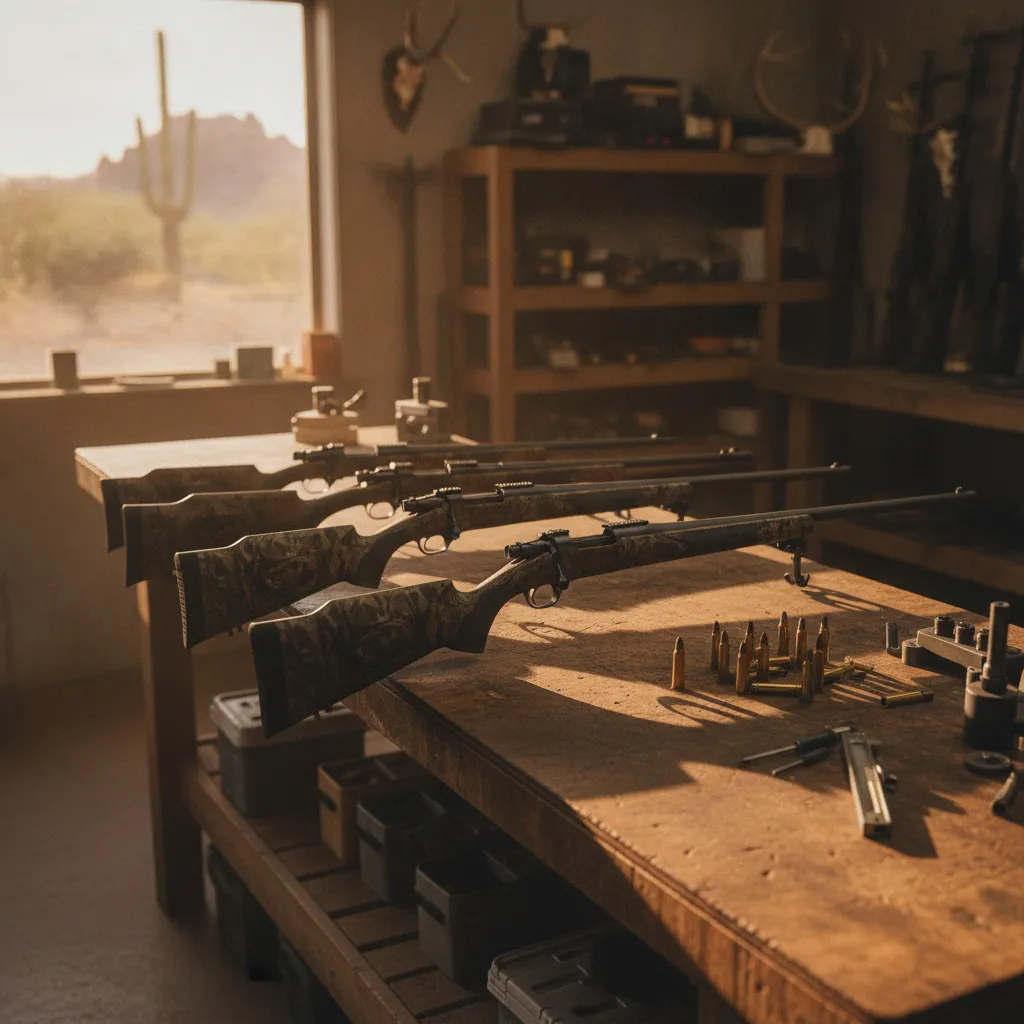
An aggregate-data analysis of the Mesa builder's 20-rifle current catalog shows a decisive pivot to PRC-family cartridges and a hunting-first accuracy profile.
Precision Hunting Supply Has Bet Its Catalog on the PRC Cartridge Family
Twenty rifles, five calibers, and a clear verdict from the data: Mesa's Precision Hunting Supply has built its current inventory almost entirely around Hornady's PRC family, betting the shop's reputation on magnum-performance hunting rounds rather than PRS-circuit chamberings.
The PRC Family Has Taken Over the Build Sheet
Thirteen of twenty current builds — 65 percent of inventory — are chambered in 7mm PRC or 6.5 PRC alone.
Look across Precision Hunting Supply's twenty currently listed rifles and one trend jumps out before you even get to accuracy numbers: seven of them are chambered in 7mm PRC and six more in 6.5 PRC. That's thirteen of twenty rifles — sixty-five percent of the entire current inventory — built around Hornady's PRC cartridge family. Add four rifles in 25 Creedmoor and two in 300 PRC, and PRC-pattern or Creedmoor-derived cartridges account for nineteen of twenty builds. Only a single 22 Creedmoor rifle sits outside that lineage, and even that is a scaled-down Creedmoor-pattern round rather than a genuine outlier.
This is not a subtle shift. A shop that a few years ago would have been moving .300 Win Mag, 7mm Rem Mag, and .300 WSM builds has instead consolidated almost its entire current-build catalog around cartridges that didn't widely exist in factory rifles a decade ago. The PHS Semi Custom 7 PRC and Seekins Precision PH3 7 PRC sit alongside Ruger, Springfield, and Bergara variants in the same chambering — meaning PHS isn't betting on 7mm PRC through a single platform partnership, it's offering it across nearly every OEM relationship it holds.
That's a meaningful signal for buyers trying to read a builder's specialty from aggregate data rather than marketing copy. When a shop's caliber distribution clusters this tightly around one cartridge family across multiple different rifle brands, it tells you the demand is coming from the customer base, not from a single manufacturer partnership being pushed. PHS's Mesa location, hunting-outfitter ties, and veteran/outfitter discount programs all point toward a clientele that wants magnum-class terminal performance out of a short action — exactly what the PRC family is designed to deliver.
A Hunting Specialist's Accuracy Profile, Not a PRS Shop's
Every chambering in the current catalog is a hunting-capable magnum round — this is a hunting specialist whose rifles are simply accurate enough to be competitive.
The use-case tagging on PHS's current inventory reads 17 hunting-tagged builds against 10 tagged for PRS competition, with plenty of overlap between the two categories — a rifle bought for backcountry elk hunting is increasingly also being run at local PRS-style matches, and PHS's build sheet reflects that crossover rather than a hard specialization in either direction. But the caliber mix tells the more honest story: none of the current builds are chambered in the staple PRS-circuit rounds like 6mm GT, 6 Dasher, or .224 Valkyrie that dominate pure competition-chassis shops. Every single chambering on the list is a hunting-capable magnum or near-magnum round. This is a hunting specialist whose rifles happen to be accurate enough to be competitive, not a match shop that also takes hunting orders.
The average verified MOA across the catalog sits at 0.5063 — a genuinely strong number for factory-action-based semi-custom builds, and one that holds up well against tier peers who often average closer to 0.6-0.7 MOA on comparable hunting-weight rifles. Individual standouts push that average down meaningfully: the Allterra-X 6.5 PRC posts a 0.23 MOA verified group, and the Allterra X 25 Creedmoor comes in at 0.25 MOA — both well inside what most builders would call exceptional for a hunting-profile rifle rather than a dedicated bench gun.
But it's worth noting how many rifles in the catalog carry no verified MOA figure at all — eight of the twenty listings, including the Seekins Precision Havak PH3 300 PRC and the Bergara Premier 6.5 PRC. That's a meaningful gap in the data set. PHS advertises a sub-MOA guarantee at 1,000 yards on build-to-suit orders, which is a serious claim to back, but nearly forty percent of the current catalog lacks the third-party verification to confirm it. For a shop built around a turnkey accuracy promise, that's the one place the aggregate numbers ask more questions than they answer.
Platform Choice Reveals a Systems-Builder, Not a Chassis Shop
The common denominator across this catalog isn't action brand or price — it's the guaranteed optic-and-ammo package PHS wraps around every rifle.
PHS's rifle brands read like a who's-who of premium hunting-rifle OEMs rather than boutique PRS chassis makers: Seekins Precision, Bergara, Ruger, Springfield, Sig Sauer, alongside custom-brand offerings from Fierce, Allterra, and Curtis Custom. There isn't an Impact, Surgeon, or Terminus action anywhere in the current twenty — the kind of fully modular competition chassis systems that dominate PRS-circuit builder catalogs elsewhere. That absence is the clearest evidence that PHS is positioning itself as a systems integrator for hunters rather than a competition-chassis fabricator.
This lines up with the company's own stated model: pairing a rifle with a matched optic and a custom ballistic solution, then running the whole package through an in-house accuracy-tuning service before it ships. Every build in this catalog, whether it started as a Ruger American Gen II or a Curtis Custom action, goes through the same pipeline — which is why the Curtis Custom X-Lite 7 PRC and the far more budget-oriented Bergara Sierra Wilderness 22 Creedmoor can sit on the same current-build list without feeling like a mismatch. The common denominator isn't action brand or price point — it's the guarantee and the bundled optic-and-ammo package that PHS wraps around every rifle regardless of its starting platform.
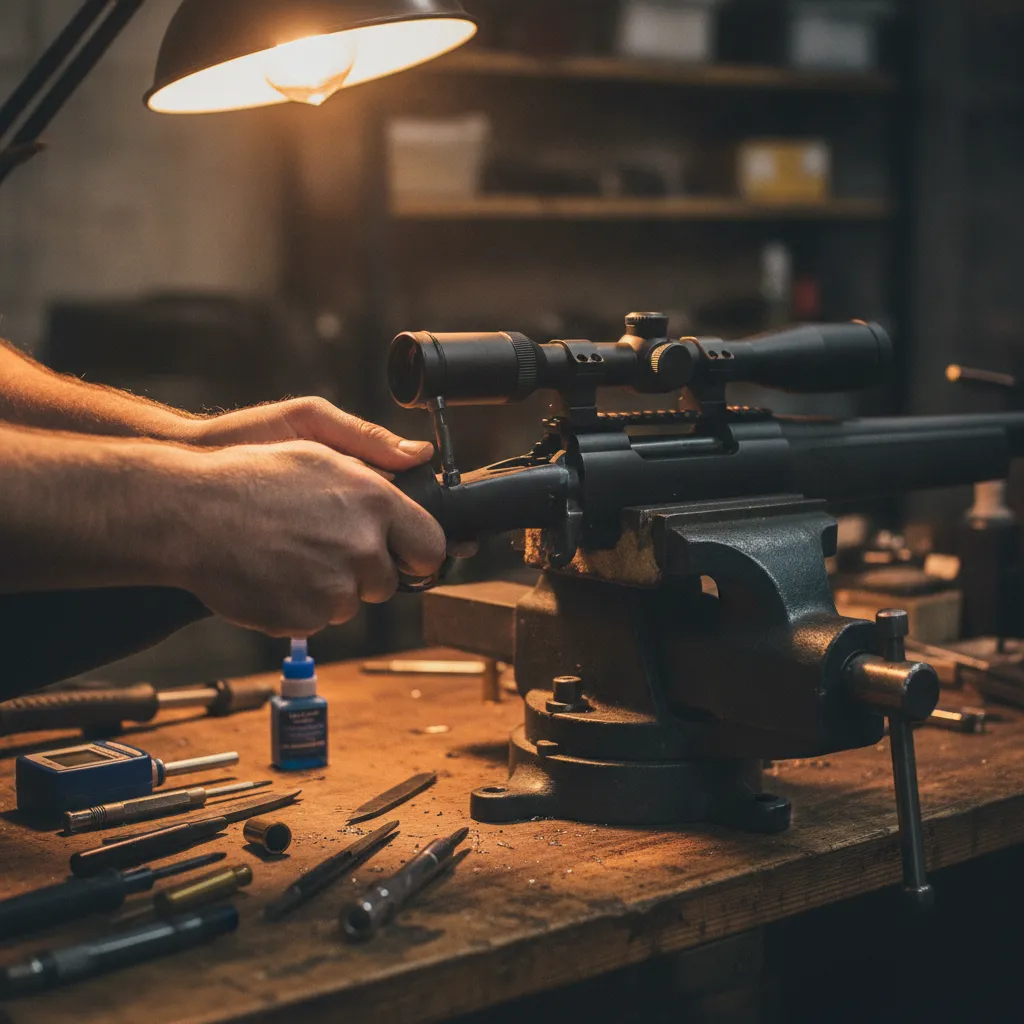
That systems-first approach also explains why PHS's caliber mix skews so heavily toward factory-available PRC chamberings rather than wildcat or proprietary rounds that would require bespoke reamers and load development from scratch. Building a repeatable, guaranteed sub-MOA package at volume is much easier when the ammunition and components already exist on dealer shelves. It's a pragmatic trade-off: PHS gives up some of the exotic-cartridge flexibility a pure custom shop might offer, in exchange for consistency across twenty simultaneous builds and a faster path from order to delivery.
What the Mix Says About Where PHS Is Headed
Read as a single data set, PHS's current inventory tells a coherent story: a Mesa-based systems builder that has fully committed to the PRC cartridge family as its default long-range hunting chambering, backed by a verified 0.51 MOA average that holds its own against tier peers, wrapped in a hunting-first use-case profile that only lightly touches PRS competition. The caliber distribution — 7 in 7mm PRC, 6 in 6.5 PRC, 4 in 25 Creedmoor, 2 in 300 PRC, 1 in 22 Creedmoor — isn't a random snapshot of whatever came through the shop this quarter. It's a deliberate reflection of what modern long-range hunters are asking for, and PHS has built its OEM relationships and its Accurizer pipeline around answering that demand at scale.
The founder badge and verified tier standing suggest PHS has cleared the credibility bar that matters most to buyers evaluating a semi-custom builder from a distance: independently confirmed accuracy claims on at least some portion of the catalog, a track record of shipped rifles, and enough volume — twenty rifles on record, all currently for sale — to demonstrate this isn't a hobbyist operation building one gun at a time. What buyers should watch going forward is whether that unverified-MOA gap closes. A shop making a sub-MOA guarantee needs its data to catch up with its marketing, and right now eight of twenty listings are running on trust rather than a chronograph and a target.
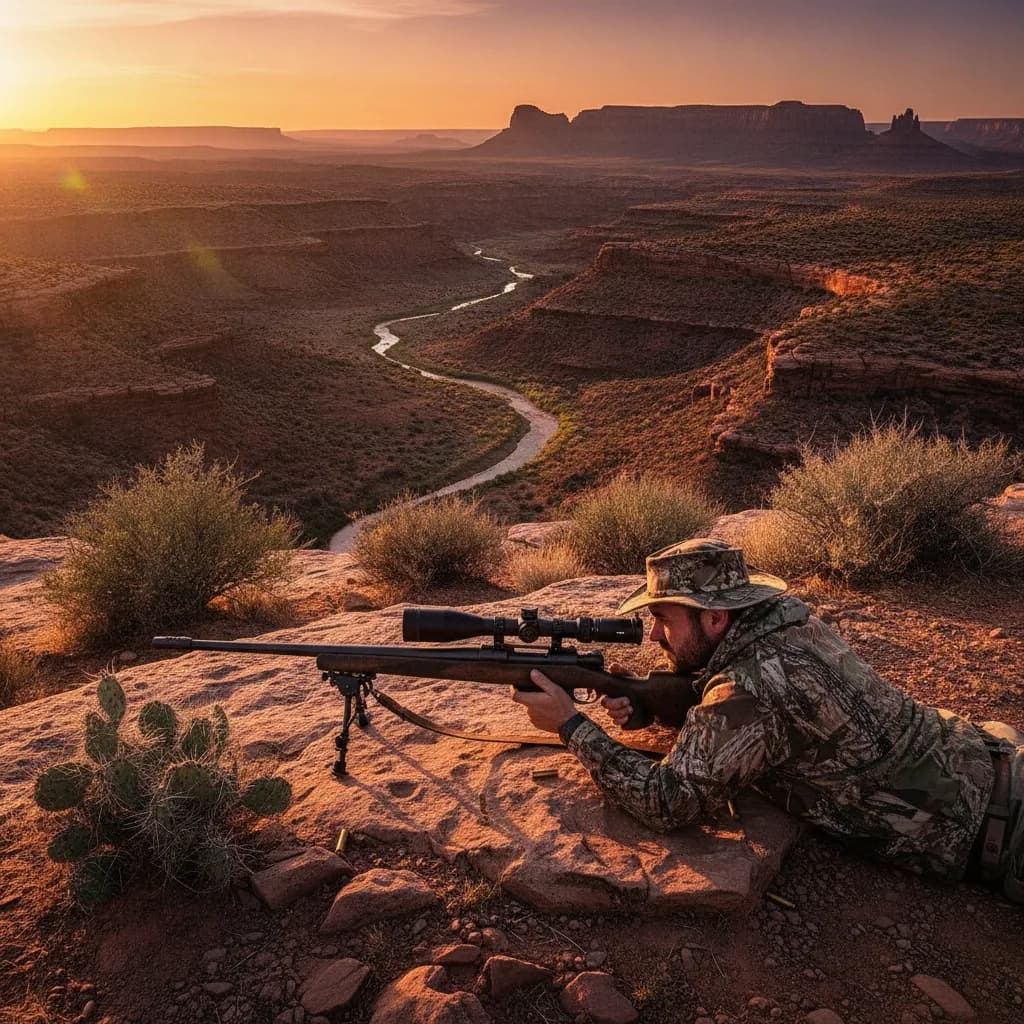
For a hunter shopping tier peers, the takeaway is straightforward: if the goal is a magnum-class PRC-family rifle built as a complete hunting system rather than a bare competition action, PHS's current catalog is about as concentrated a bet on that exact niche as you'll find. The Seekins Precision 25 Creedmoor and its 0.51 MOA verified group are as representative of this shop's current identity as anything else on the list — a hunting-purpose rifle, built on an established OEM action, tuned to a number that would be respectable on a dedicated bench gun. That's the profile PHS has built its current body of work around, and the aggregate data backs it up cartridge by cartridge.