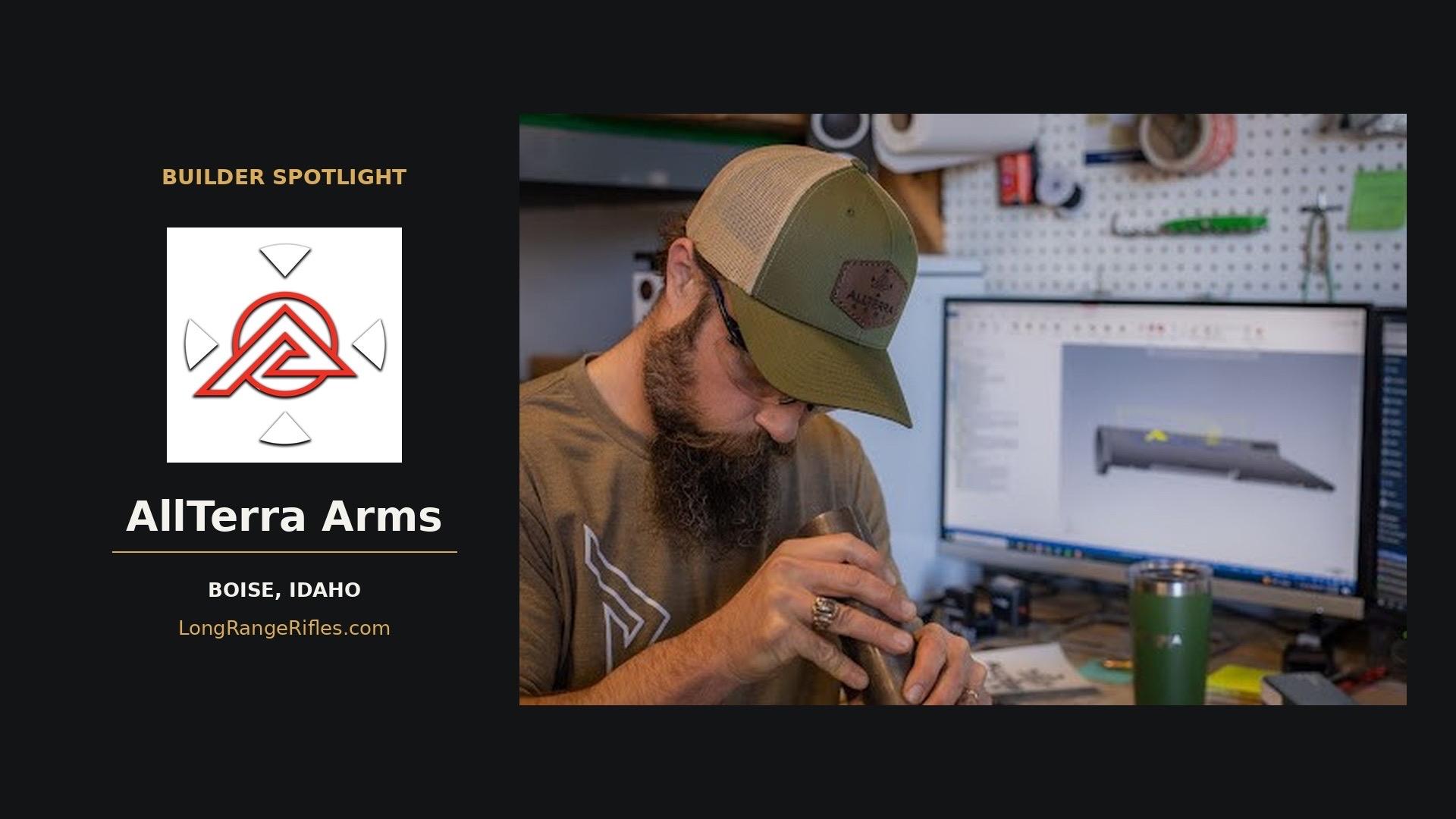
Drew Foster came to rifle design from automotive repair and fleet management. His early sketches became Axial Precision, then AllTerra Arms, a Boise company that brought key manufacturing work under its own roof.
The Boise Shop Drew Foster Built to Make AllTerra Arms
Drew Foster came to rifle design from automotive repair and fleet management. His early sketches became Axial Precision, then AllTerra Arms, a Boise company that brought key manufacturing work under its own roof.
Drew Foster first thought he could improve hunting rifles by modifying the ones already on the market. As the project developed, he decided he needed to design a complete rifle around his ideas. Then he ran into a second decision. He could keep relying on outside suppliers for critical work, or he could buy machines and develop the expertise to do that work in Boise. Foster chose the machines. That decision explains a great deal about the company AllTerra Arms became. Drew Foster’s account of the company’s development · AllTerra Arms team biography
The mechanic who started drawing rifles
Foster grew up in Klamath Falls, Oregon, moved to Idaho, and earned a business finance degree at Boise State University. He worked in automotive repair and fleet management, with shooting and the outdoors as interests outside work. AllTerra dates its founding to 2015. The company originally operated under the name Axial Precision and adopted AllTerra Arms in 2019. Foster’s own account traces the product back to sketches and prototypes, with roughly two years of development and field testing before the underlying idea was proved to his satisfaction. AllTerra Arms’ company history · Foster’s team biography · Foster’s account of early development
The problem Foster saw came from comparing rifles built for different jobs. He admired the precision of competition rifles and wanted to carry some of that thinking into a rifle intended for hunting. A hunting rifle also has to spend time being carried and used outdoors. In Foster’s account, the challenge was to preserve the alignment he wanted at the moment of firing while allowing the action to operate under ordinary field conditions. That was the idea behind the Axial Precision name, and it remained part of the company’s story after the rebrand. Foster’s account of the original design brief
Why manufacturing moved under one roof
A workable prototype gave Foster something to show a supplier. Turning that prototype into repeatable work was another matter. He writes that outside manufacturing partners had difficulty consistently meeting the tolerances he wanted, so the company began bringing key work in-house. He identifies a wire electrical discharge machining machine as the first major acquisition in that transition, followed by a CNC lathe and additional mills. In his telling, those purchases gave the company more control over what happened between a drawing and a finished component. AllTerra’s shift to in-house manufacturing
The machines tell only part of that story. The shop’s published team biographies trace several routes into rifle manufacturing. Matt came from Rekluse Motorsports, where AllTerra says he spent 15 years building machining experience. Gunsmith and production supervisor Tyler Roberts trained at Pine Technical College and worked at Dakota Arms and the Remington Custom Shop in Sturgis before joining AllTerra. Alex Martin came from CNC woodworking and contributes to machining and stock production. Drayton Murphy’s work as a sign maker preceded his role in finishing and stock production. The Boise operation depends on those distinct trades coming together on the same shop floor. AllTerra Arms team biographies
From a component idea to a complete hunting rifle
Today, AllTerra presents its work both as standalone rifle models and as complete systems. Its LongRangeRifles.com profile describes packages that can bring the rifle, optic, and ammunition together. That scope follows from Foster’s decision to design around the finished rifle. The company’s public discussion of the approach has also shifted from individual parts to how the package is specified and delivered, a subject it took up in a 2026 conversation on Rokcast. AllTerra’s builder profile · AllTerra Arms on Rokcast
Three AllTerra builds in the registry
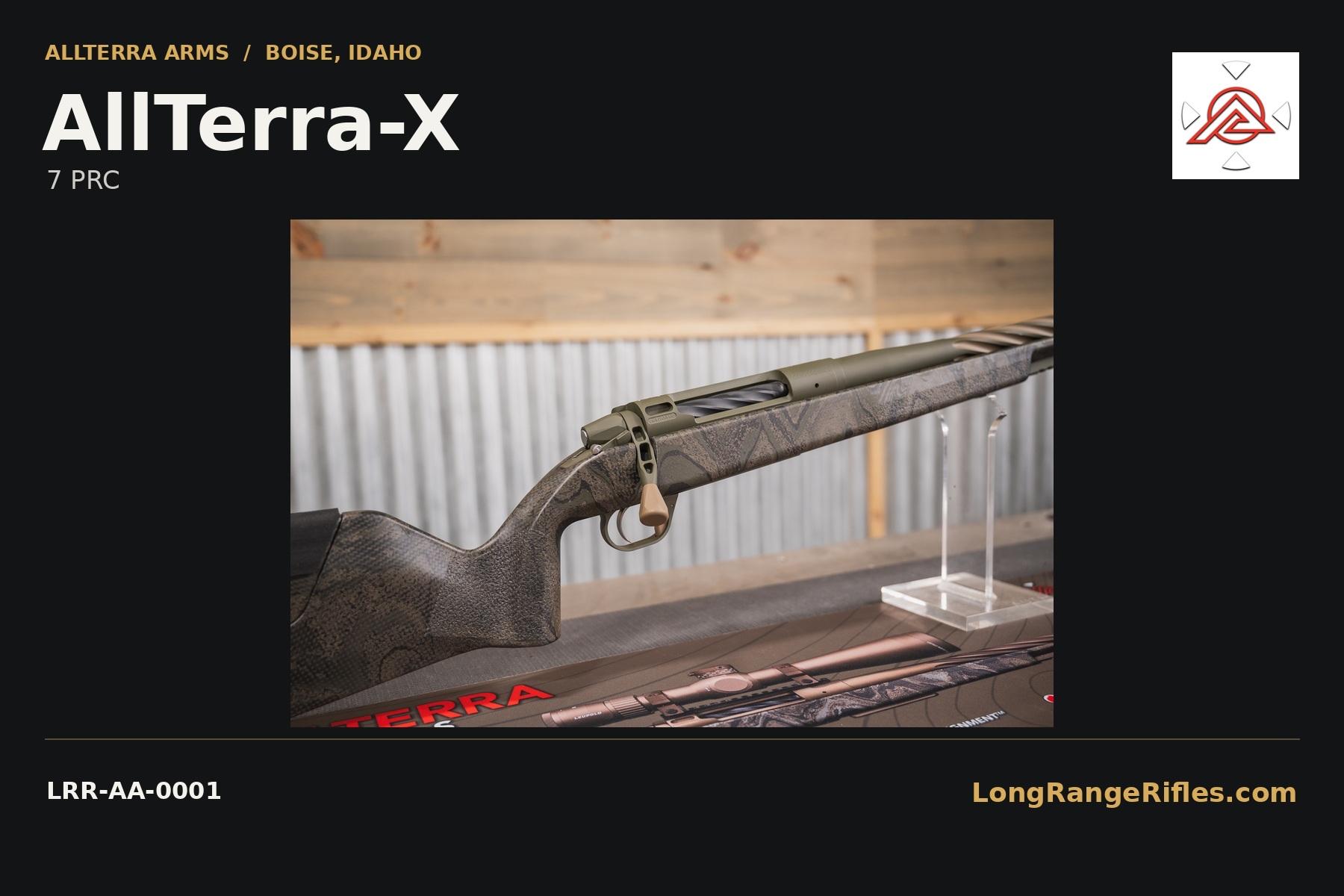
● AllTerra-X, 7 PRC — LRR-AA-0001. The 7 PRC example gives readers an entry point into the company’s namesake X model. View the AllTerra-X
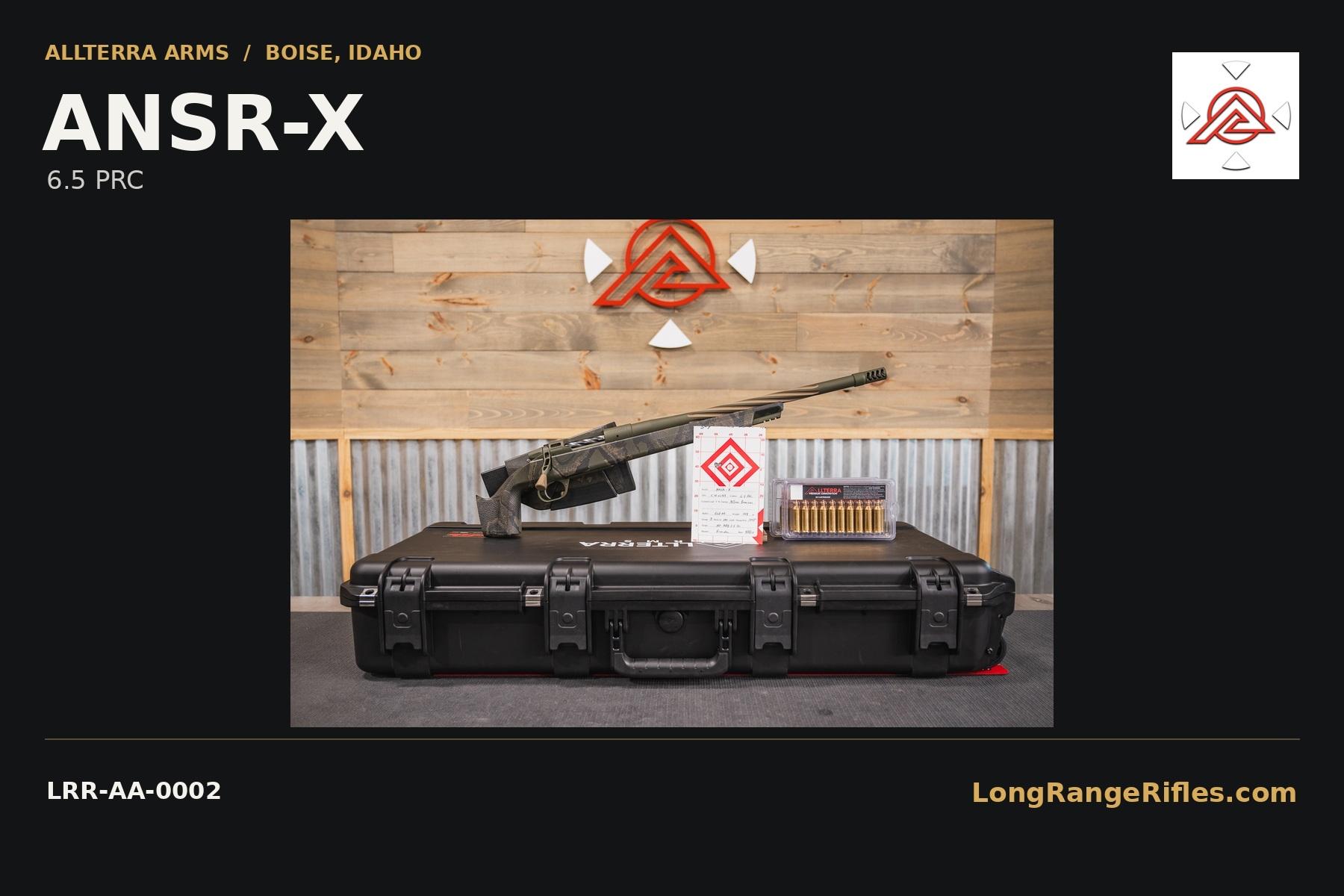
● ANSR-X, 6.5 PRC — LRR-AA-0002. The registry records this as its own production build, with a separate model name and chambering. View the ANSR-X
● Mountain Shadow Steel, .300 PRC — LRR-AA-0003. This entry rounds out the Boise shop’s current registry portfolio and gives readers a look at the steel version of the Mountain Shadow. View the Mountain Shadow Steel
Foster’s original decision to build a complete rifle led to a series of business decisions about what the company needed to do for itself. The clearest result is the Boise operation itself. It brings people from motorsports, traditional gunsmithing, woodworking, and finishing together to make the rifles that started with Foster’s sketches. Explore AllTerra Arms on LongRangeRifles.com