A data-driven look at how Mesa's Precision Hunting Supply has concentrated its current catalog around 6.5 and 7 PRC hunting builds
Inside Precision Hunting Supply's PRC-Heavy Build Sheet
Precision Hunting Supply's current roster skews hard into magnum PRC territory, with 6.5 and 7 PRC chamberings now outnumbering every other caliber combined — a clear bet on hunters who want one rifle for elk, mule deer, and distant steel alike.
The Quarter in Numbers: A Builder Leaning Into Magnum Hunting Rounds
Precision Hunting Supply's current inventory of twenty-two rifles tells a pointed story: this is a shop that has consolidated around a narrow band of magnum hunting cartridges rather than chasing caliber diversity. Seven rifles chamber 6.5 PRC, seven chamber 7 PRC, four run 25 Creedmoor, two are built on 300 PRC, and the remainder — a 22 Creedmoor and a .45 muzzleloader — round out the edges. That means fourteen of twenty-two current listings, nearly two-thirds of the entire roster, sit in the PRC family alone. For a production-tier builder working out of Mesa, that is not incidental overlap; it is a deliberate specialization in cartridges built for flat trajectories past 600 yards without the recoil penalty of true magnums like the .300 Win Mag or 28 Nosler.
The mix also reveals something about where PHS sees its customer base heading. The 25 Creedmoor presence — four rifles, all built on either Seekins Precision or Allterra-X platforms — reflects a cartridge that only reached SAAMI standardization in the last few years and remains a minority chambering industry-wide. A builder stocking four of them simultaneously, representing nearly a fifth of total inventory, is either responding to concentrated regional demand in the Southwest or is actively steering hunters toward a cartridge the shop believes outperforms the old 6.5 Creedmoor for mule deer and antelope work at altitude.
What's conspicuously thin is anything on the traditional end of the spectrum. There's no .308 Winchester, no 6.5 Creedmoor, no .30-06 in the current lineup — cartridges that dominated hunting rifle inventories for most builders a decade ago. PHS has effectively skipped the legacy-caliber conversation entirely and built its entire current catalog around cartridges introduced or popularized in just the last six to eight years.
Precision Numbers: Sub-Half-MOA as the Baseline, Not the Ceiling
Where PHS distinguishes itself from typical production-tier builders is in the verified accuracy data. Across the rifles with recorded groups, the average comes in at 0.4938 MOA — comfortably inside the half-minute threshold that separates genuine precision builds from standard factory-tier output. That average is also pulled up by a cluster of standout performers: the Allterra X 25 Creedmoor posted 0.125 MOA, and the Allterra-X 6.5 PRC — note this is a separate build from the 25 Creedmoor variant — came in at 0.23 MOA. Those two rifles alone sit in territory most custom shops only claim in marketing copy and rarely document with actual verified data.
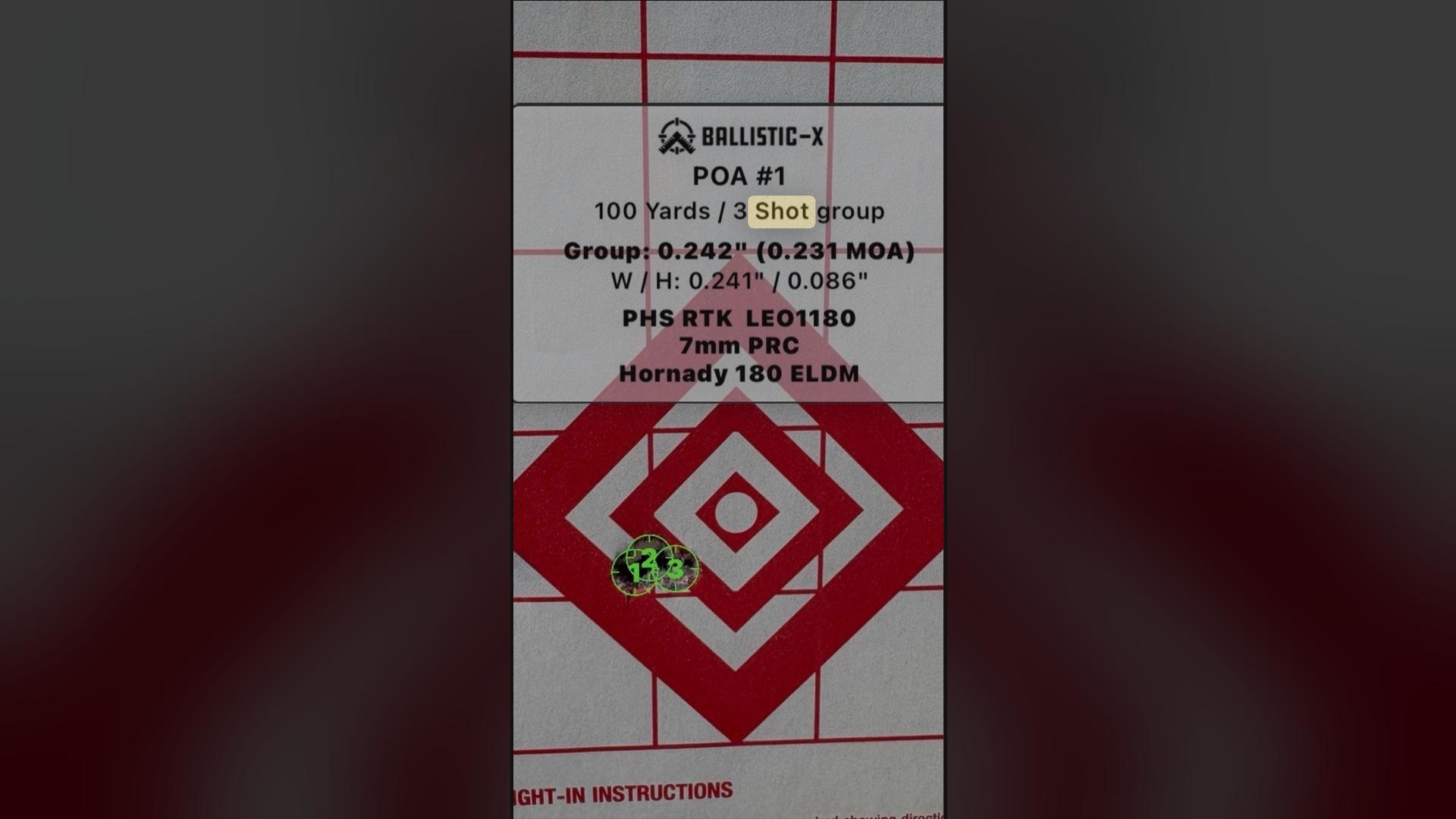
It's worth noting the spread, though, because it matters for buyers evaluating this builder against peers. Not every rifle in the lineup hits that sub-quarter-MOA mark — the Ruger American Gen 2 6.5 PRC came in at 0.755 MOA and the Ruger American Gen II 7 PRC at 0.79 MOA, both still well within acceptable hunting accuracy but noticeably behind the Allterra and Fierce Carbon builds. That gap tracks logically with action choice: the Ruger American platform is a budget-forward factory action, while the Allterra-X and Fierce Carbon Rogue 6.5 PRC are built on chassis systems with tighter action-to-barrel tolerances and typically better bedding consistency out of the box.
Almost half the roster — ten of twenty-two rifles — carries no verified MOA figure at all, which is common for newly listed builds that haven't yet been through a documented range session with this publication. That unverified cohort includes several Bergara and Seekins Element Hunter builds, meaning the true precision average for the full catalog, once those groups get documented, could shift in either direction. Buyers evaluating a specific rifle from this builder should treat the 0.4938 MOA average as representative of PHS's demonstrated capability, not as a guarantee attached to every unverified listing.
Hunting First, Competition Second — By a Wide Margin
The use-case split confirms what the bio states outright: this is a hunting specialist, not a PRS shop that happens to sell hunting rifles on the side. Nineteen of the twenty-nine use-case tags recorded (a rifle can carry more than one use-case designation) point to hunting applications, versus ten for PRS competition. That's roughly a two-to-one lean toward the field over the match, and it shows up in the component choices across the catalog — shorter, lighter carbon-fiber-barreled builds like the Fierce Carbon Rogue and the Allterra-X platforms, rather than the heavy-contour steel barrels and full-size chassis systems that dominate dedicated PRS catalogs.
This matters for how a prospective buyer should read the PHS lineup relative to other verified builders on this site. A shop whose use-case profile runs closer to even, or tilts toward competition, is optimizing for repeatable mechanical accuracy under timed, standardized conditions — flat-bottom forends, adjustable cheekpieces, heavier barrel profiles that resist heat-induced POI shift across a twenty-round stage. PHS's ratio suggests the opposite set of priorities: weight management for pack-in hunts, weatherproofing for field conditions, and chamberings selected for terminal performance on game rather than for barrel life under high-round-count match use.
The Seekins Precision Havak PH3 300 PRC is a useful example of that hunting-first calculus. The 300 PRC is a cartridge that can be built out as a PRS gun, but pairing it with the Havak PH3 — already a lightweight hunting-oriented chassis from Seekins — signals the shop configured it for the field rather than the line. Similarly, the lone Custom Long Range Muzzleloader in .45 caliber has zero application in competitive PRS shooting and exists purely to serve muzzleloader hunting seasons in Western states, which further confirms where PHS's actual customer demand is concentrated.
Where This Builder Sits Among Verified Production Shops
Production builders typically compete on turnaround time and price rather than bespoke precision, and a sub-half-MOA average across documented groups is a stronger showing than most shops in that segment post. The founder badge also indicates PHS has been active on the platform since early in its builder program, which combined with twenty-two current listings suggests consistent inventory turnover rather than a one-off batch of builds.
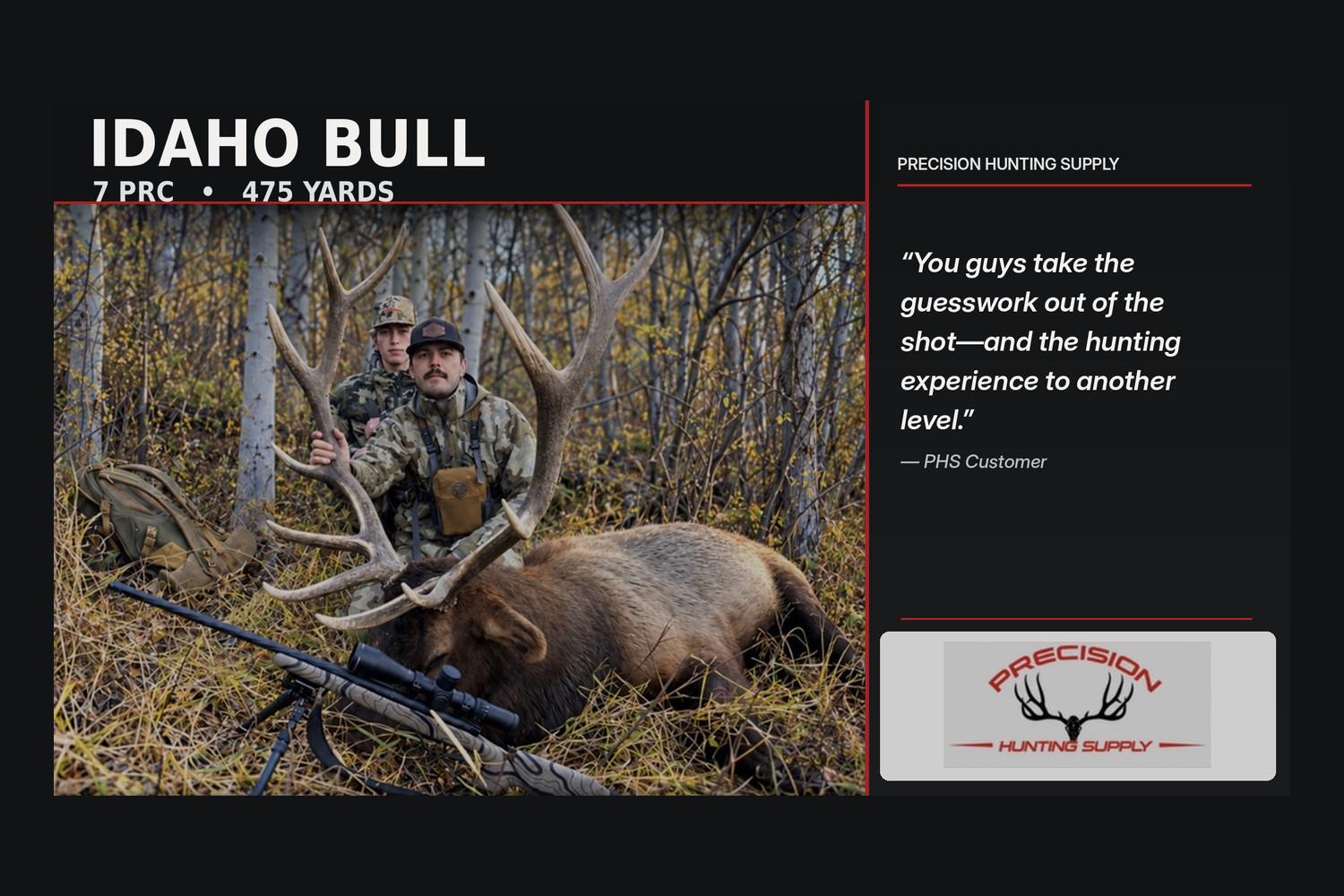
The caliber concentration carries a trade-off worth flagging for buyers comparing builders. A shop this committed to 6.5 PRC, 7 PRC, and 25 Creedmoor has almost certainly developed deep load-development and barrel-break-in experience specific to those cartridges — meaning a buyer ordering a PHS SEMI CUSTOM 7 PRC build benefits from repetition the shop has with that exact chambering across multiple platforms, from Seekins to Ruger American to Springfield Waypoint actions. That repetition is plausibly why several of the 7 PRC builds cluster tightly around the 0.5 to 0.8 MOA band rather than showing wide variance — the shop has found a load recipe and barrel combination that works and is running it consistently across different donor actions.
The flip side is that a hunter looking for something outside this builder's current lane — a true long-range magnum like .300 Win Mag, a dedicated PRS gun in 6mm GT or 6 Dasher, or a suppressor-optimized subsonic build — won't find that inventory here right now. PHS's current catalog is a snapshot of a shop that has found its niche in modern mid-size PRC cartridges for Western big-game hunting, verified its accuracy claims on a meaningful share of its builds, and is clearly prioritizing field-ready rifles over match-day ones. For the right buyer — someone chasing elk or mule deer at distance who wants documented sub-MOA performance without PRS-gun bulk — that focus is precisely the point.